How Do You Get Trapped Air Out of Water Pipes?
DIY Fixes and When to Call Assett Plumbing
Have you ever turned on your tap only to be greeted by a sputtering mess instead of a steady stream?
Or maybe you hear an annoying knocking sound coming from your pipes?
These are tell-tale signs of air trapped in your water pipes, also known as an airlock. Whilst air in your pipes can be frustrating, it's usually a simple issue to resolve, and one you may be able to resolve yourself with a little DIY know-how.
What Causes Air in Water Pipes?
Trapped air in water pipes occurs when pockets of air become lodged in the plumbing system, disrupting water flow. This phenomenon can occur for several reasons, including:
- Initial Installation: During the installation of new plumbing systems or the replacement of pipes, air can become trapped in the pipework and unable to work its way free.
- Empty Pipes: When you turn off the water supply for maintenance or repairs, air can seep into the empty pipes. When you turn the water back on, it has to push the air out before flowing normally.
- Rapid Pressure Changes: Quickly shutting off a valve or turning off a large appliance like a washing machine can cause a pressure surge, sucking air into the pipes.
- Leaks or Repairs: When plumbing repairs are made or leaks occur it can allow air to be drawn into the system, especially at high points in the plumbing.
Is Trapped Air in Pipes Dangerous?
While a sputtering tap or a humming pipe might seem like a minor annoyance, trapped air in pipes can cause more than just noisy plumbing. In most cases, airlocks aren't an immediate "plumbing emergency," but they can cause incremental damage to your home’s infrastructure.
1. Damage to Appliances
Modern appliances like dishwashers, washing machines, and electric showers rely on a steady, pressurized flow of water to function correctly. If air pockets reach these units, it can cause the internal pumps to run "dry." Without the cooling and lubricating properties of water, these pumps can overheat and burn out, leading to expensive repairs or total replacements.
2. Corrosion and Oxidation
Air contains oxygen, and when pockets of air sit inside metal pipes for extended periods, they can accelerate internal corrosion. This is particularly true in central heating systems. Over time, this oxidation creates "sludge" (iron oxide), which can block your boiler’s heat exchanger and reduce the lifespan of your radiators.
3. The "Water Hammer" Effect
Trapped air is a leading cause of water hammer—that violent banging or thumping sound you hear when you turn off a tap. This happens because air is compressible, while water is not. The resulting pressure surges put immense physical stress on pipe joints and solder points. If left unchecked, the repeated vibration can eventually cause a joint to fail, leading to a hidden leak inside your walls or floors.
4. Inconsistent Temperatures and Scalding
If air is trapped in your hot water lines, it can cause the water temperature to fluctuate wildly. This is not just uncomfortable; it’s a safety risk. A sudden "burp" of air can cause the water to momentarily surge at a much higher temperature, posing a scalding risk, especially for children or the elderly.
Identifying the Symptoms of Air in Your Pipes
Before attempting to remove trapped air from your water pipes, it's essential to identify the symptoms associated with this issue.
Common signs of trapped air include:
- Sputtering or Spurting Water: When you turn on a tap or shower, you may notice irregular bursts of water, indicating air in the pipes.
- Low Water Pressure: Trapped air can impede the flow of water, resulting in lower water pressure throughout your plumbing fixtures.
- Gurgling Sounds: Air bubbles moving through the pipes can create gurgling or bubbling noises, particularly when water is running.
- Inconsistent Water Temperature: If air is trapped in your hot water pipes, you may experience fluctuations in water temperature when using hot water fixtures.
Now that you're familiar with the causes and symptoms of trapped air in your water pipes, let's look at some DIY steps you can take that can try to resolve it yourself.
DIY Fixes for Airlocks in Your Plumbing.
In most cases, you can get rid of airlocks yourself with a little patience and these simple steps:
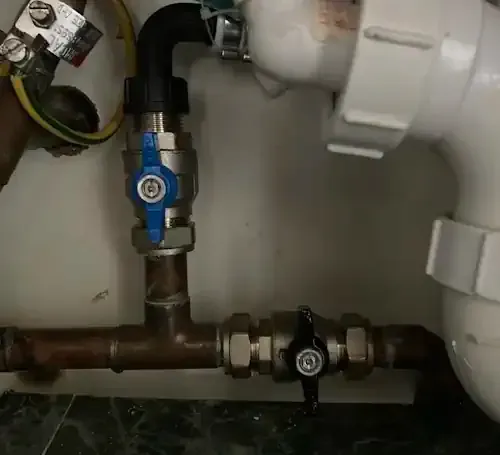
- Locate the Shut-Off Valve or Stopcock: Find the main water supply valve for your home. It looks like a regular tap but has pipe going into one end and out the other, with no outlet spout (see image below). It's often located under the kitchen sink but may be found elsewhere in older houses, towards the front of the house, in a cupboard or even in your basement.
- Turn Off the Water: Turn the valve clockwise to shut off the water supply completely.
- Open the Taps: With the water off, open all the taps (hot and cold) in your house, including the bath, shower and outside hose tap (if applicable). Open them fully, but not forcefully.
- Release the Air: Once the remaining water clears from the pipes, you may hear air hissing out of the open taps. Let them run for several minutes until there is no further water coming from any of the taps.
- Turn On the Water Supply: Slowly turn the main shut-water valve counter-clockwise to reintroduce water into the system, the taps will all start flowing, releasing any further air in the process.
- Close the Taps: Once you have a steady stream from all taps, start closing them one by one, beginning with the furthest one from the main shut-off valve and working your way back.
How to Clear a Stubborn Airlock: The Hosepipe Trick
If the standard method of opening all your taps hasn't worked, particularly for hot water taps that are completely airlocked, the "Hosepipe Trick" is an industry-standard DIY fix.
This method works by using the high pressure of your cold water mains to physically "blast" the air bubble out of the lower-pressure hot water system and back up into the cold water storage tank.
What You’ll Need:
- A standard garden hose (or a shorter washing machine hose).
- Hose connectors (Hozelock style) or strong waterproof tape.
Step-by-Step Instructions:
- Connect the Taps: Attach one end of the hose to the affected hot water tap (the one that isn't running). Attach the other end to a nearby cold-water tap supplied by the mains (usually the kitchen sink tap).
- Seal the Connection: Ensure the connections are airtight and watertight. If the hose isn't a perfect fit, use a "tap connector" or wrap the join tightly with tape. You don't want the hose to pop off once the pressure builds!
- Open the Hot Tap: Turn the hot water tap on fully. No water will come out yet because of the airlock.
- Open the Cold Tap: Slowly turn on the cold water tap. You will hear the water rushing through the hose and into the hot water pipe.
- Hold for 30–60 Seconds: Let the cold water force its way into the hot system. This creates backpressure, pushing the trapped air bubble back up the pipe and into the cold-water header tank (usually in the loft - if you have one).
- Turn Off in Reverse: Turn off the cold tap first, then the hot tap.
- Test the Flow: Remove the hose and turn on the hot tap. You should hear a gurgle followed by a steady, strong stream of water.
Important Note: Only leave the cold tap on for a minute at a time. If you leave it too long, you risk overfilling your cold water storage tank.
Still Sputtering?
Sometimes an airlock is a symptom of a more complex plumbing issue, like a faulty ball valve or a hidden leak. If the hosepipe trick doesn't do the job after two or three attempts, it’s time to call in a professional to prevent any damage to your boiler or internal pipework.
And this is an advanced DIY tip, so we would not recommend doing this unless you are sure of the issue and equally sure that this may resolve it. Be prepared for a mess if it goes wrong, and we always recommend calling a trained professional when a blockage or airlock is bad enough to require it.
Signs You Need Professional Help from Assett Plumbing
While the steps above should resolve most airlock issues, there are situations where it's best to call a professional plumber, such as:
- The Problem Persists: If you've tried the DIY method and air keeps getting trapped in your pipes, it could indicate a more significant issue like a leak or a faulty valve.
- Low Water Pressure: If you have low water pressure throughout your house after attempting to remove an airlock, there might be a blockage in the pipes requiring professional attention.
- Noisy Pipes: Hissing, knocking, or gurgling sounds even after bleeding the air can be signs of a more serious problem like water hammer or damaged pipes.
- Leaks: If you notice leaks while attempting to remove an airlock, stop immediately and call a plumber. Leaks can lead to water damage and mould growth.
- Smelly Water: If the air is accompanied by a "sulfur" or "rotten egg" smell, then you could have a venting or water heater bacteria issue.
- Vibrating Walls: If the "knocking" is so severe that it’s shaking the pipe brackets loose, it's time to get a local plumber in!
Assett Plumbing: Your Local Plumbing Experts
If you've tried the DIY methods and the airlock is still present, or if you encounter any of the situations mentioned above, don't hesitate to contact Assett Plumbing. Our experienced plumbers in Thrapston, Northampton, Kettering, Corby, and Wellingborough are available 24/7 to diagnose and resolve your plumbing issues efficiently and affordably.
We offer a wide range of services, including:
- Airlock removal and troubleshooting
- Leak detection and repair
- Tap and toilet repair and replacement
- Boiler service and installation
- Drain cleaning
- Power Flushing
- And more!
We understand the importance of functioning plumbing in your home.
Assett Plumbing is based throughout Northamptonshire and covers Thrapston, Northampton, Kettering, Corby and Wellingborough.
We offer free callouts and can take care of any local plumbing, including boiler replacement, annual boiler service, emergency plumbing repairs and any central heating work undertaken.
Contact Assett Plumbing today on 01604 372395.
You might also like