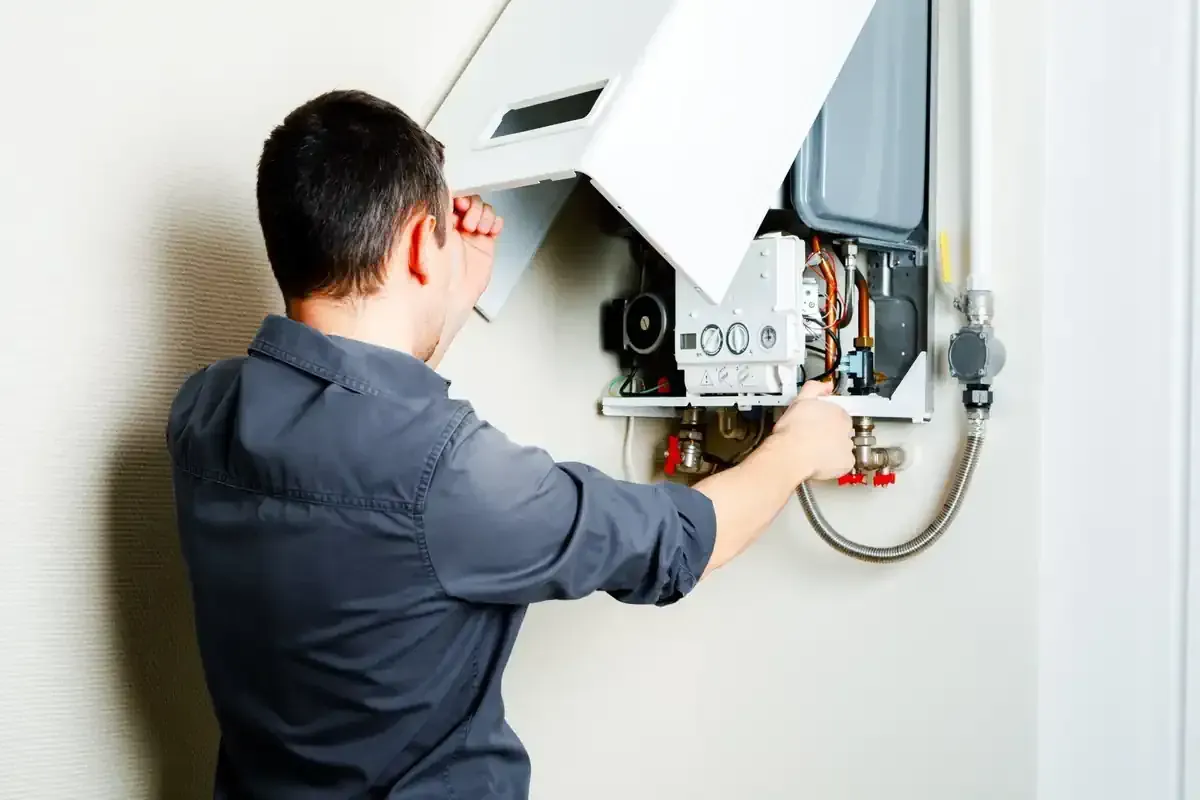
Why Does My Boiler Keep Losing Pressure? Causes and How to Fix It
Have you noticed your boiler pressure dropping every few days, even after topping it up? If your boiler keeps losing pressure, it usually means water is escaping somewhere in the heating system or a component is not working properly.
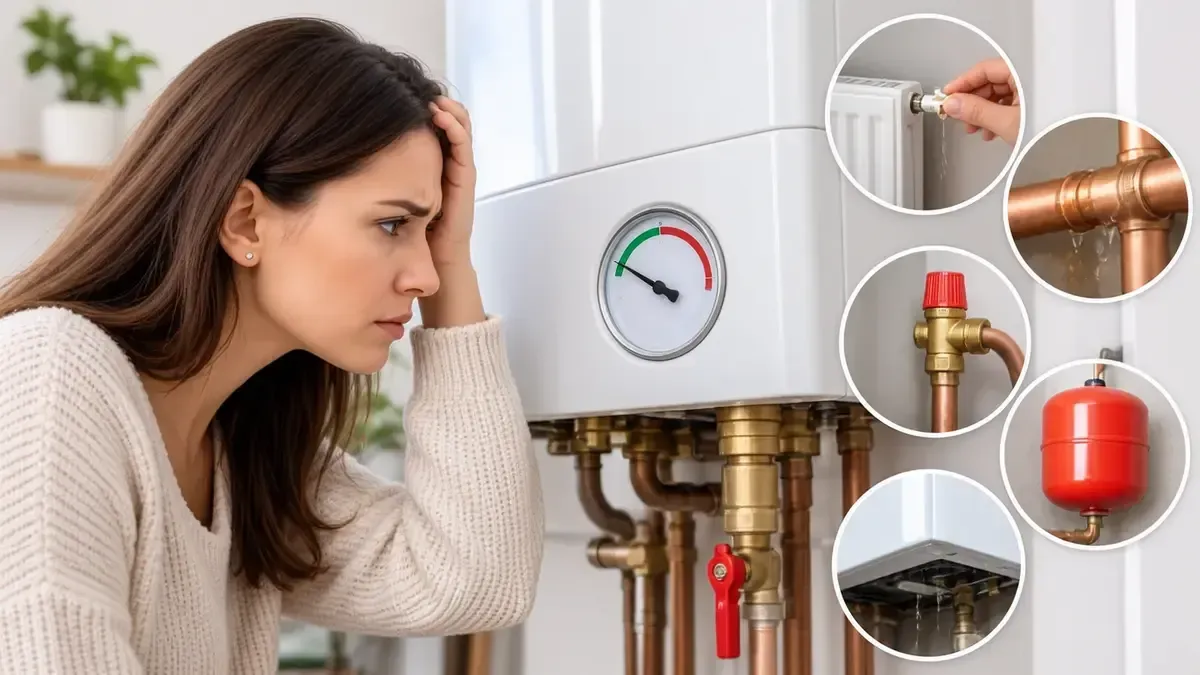
Common causes include leaking radiator valves, damaged pipe joints, a faulty pressure relief valve, or a weak expansion vessel. Although a small pressure drop after bleeding radiators can be normal, repeated pressure loss should never be ignored. Most boilers work best at around 1 to 1.5 bar when cold, so keeping an eye on the pressure gauge can help you spot problems early.
In this guide, we explain why your boiler keeps losing pressure, how to identify common warning signs, how to safely repressurise your boiler, and when to call a Gas Safe engineer for professional repairs. If the problem continues, seeking professional boiler repair services can help identify the underlying fault and restore your heating system's performance.
What Is Boiler Pressure?
Boiler pressure is the force of the water inside your sealed heating system. Older homes use a water tank in the loft, but most modern boilers do not. They use a small tank called an expansion vessel instead. Water grows bigger when it heats up, and the expansion vessel soaks up that extra space. This keeps the pressure steady, so your boiler runs safely.
What Should Boiler Pressure Be?
Look at the gauge on the front of your boiler. Most sealed systems sit between 1 and 1.5 bar when cold. Your manual gives the exact range for your model. Use this quick guide:
| Gauge Reading | What It Means | What to Do |
|---|---|---|
| Below 1 bar | Pressure is too low, and the boiler may cut out | Top up with the filling loop |
| 1 to 1.5 bar (cold) | Normal | Do nothing |
| Above 2.5 bar | Pressure is too high | Bleed one radiator to release extra water, and check the filling loop is shut |
| Drops again after a top-up | A leak or a faulty part | Stop topping up and call a Gas Safe engineer |
Why Does My Boiler Keep Losing Pressure?
A sealed system should not lose water. If the gauge keeps falling, water escapes somewhere, or a part stops working. This can happen in central heating systems when a component develops a fault or a leak occurs. Here are the usual reasons.
Bleeding Your Radiators
When you bleed a radiator, you let out trapped air and a little water, so the pressure falls. One top-up afterwards is normal. If the gauge keeps dropping after that, something else is wrong.
Leaks at Radiators and Joints
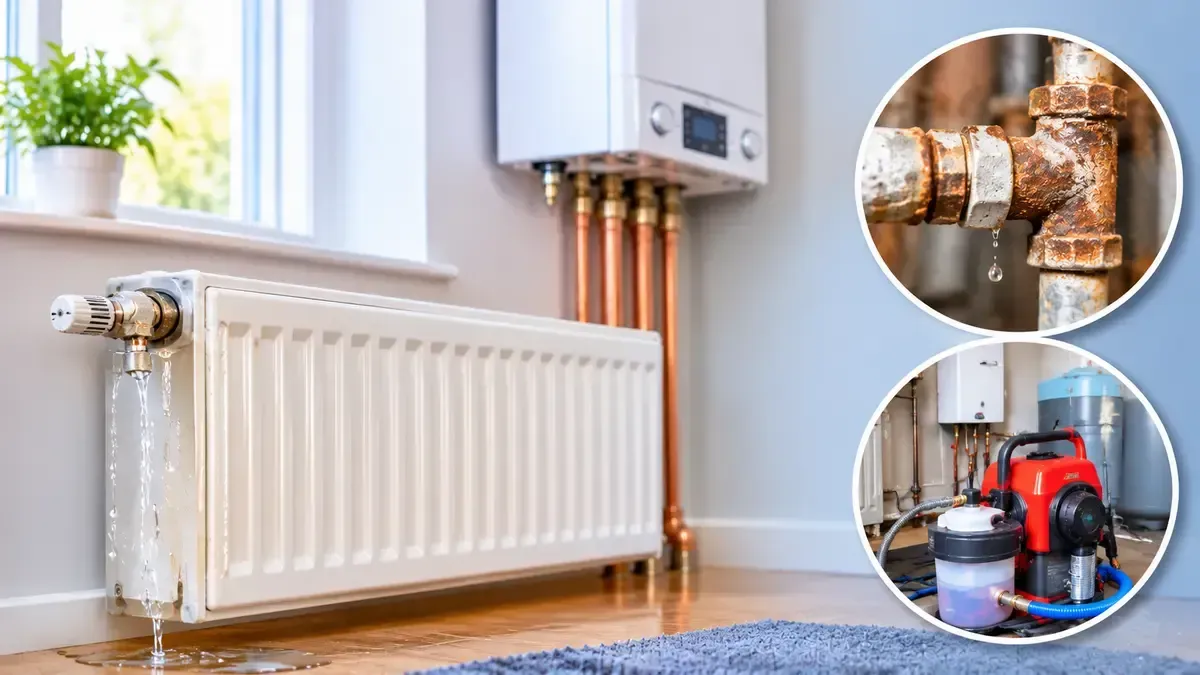
Most leaks start where pipes meet radiators. Wall-mounted radiators move a little, and that movement loosens joints over time. A wet pipe does not always mean a leak, because condensation also makes pipes damp. Dry the joint with a paper towel, place a tray or a sheet of paper underneath, and watch for a steady drip. Flaking paint, rust marks, a swollen skirting board, and stains on the ceiling below all point to a leak. Get a professional to fix any leaking joint.
Hidden Leaks
Not every leak shows itself. Pipes under floors or inside walls leak quietly for weeks. You see only a falling gauge, and later a damp wall or a warm patch. If you check every radiator and find nothing, suspect a hidden leak. Ask a professional to trace it before anyone lifts a floorboard.
A Faulty Pressure Relief Valve
The pressure relief valve is a safety part. It lets water out when pressure gets too high. Over time it wears out and starts to drip, even when the pressure is normal. Find the small copper pipe where it leaves your house. Wet ground or drips there point to a faulty valve. Only an engineer replaces it, because it protects your whole system.
A Weak Expansion Vessel
A weak expansion vessel loses its air cushion. Then the pressure jumps when the heating comes on, and the relief valve opens and lets some water go. When the system cools, the pressure sits lower than before. This cycle repeats, so the gauge creeps down. A big swing between hot and cold is the clue.
A Leak Inside the Boiler
Sometimes the leak sits inside the boiler. Old seals and parts rust or come loose with age, and you may spot a small drip under the boiler. Never remove the casing yourself. A Gas Safe engineer checks the parts and tells you what to repair. Check your warranty first, because it often covers the cost.
Why Does Boiler Pressure Drop Overnight?
A tiny drop is normal. The water cools overnight, so the gauge falls by a few tenths of a bar. A drop that carries on day after day is not normal. It usually points to a small leak or a dripping relief valve. Read the gauge at the same time each day for a week. The pattern tells you a lot. If the pressure loss is linked to an ageing or damaged boiler, an engineer can also advise whether repairs or replacement boilers are the better option.
How Serious Is Pressure Loss?
The risk depends on how often the pressure drops.
- Every few months: Low risk. Top up and keep watching the gauge.
- Every few weeks: Medium risk. Look for leaks and book an inspection.
- Every day: High risk. Call a Gas Safe engineer soon.
- The boiler shuts down or pipes leak: High risk. Stop pressing the reset button, turn the heating off, and book a repair.
Also Read: Low Water Pressure at Home: 7 Causes and What to Do About Each
How to Repressurise a Boiler With the Filling Loop
The boiler filling loop is a braided hose or a small lever under your boiler. It brings mains water into the system. Read your manual first, then follow these steps:
- Turn the boiler off and let the system cool.
- Find the filling loop. If it is the removable type, check that both ends connect.
- Open the valve slowly and watch the gauge rise.
- Close the valve when the gauge reads about 1 to 1.5 bar.
- Remove the loop if it detaches, turn the boiler back on, and reset it if needed.
- Check the gauge again once the radiators feel hot.
Never take the boiler casing off. If you feel unsure, ask an engineer to help.
Pressure Problems in Older Homes
Older houses face a special problem. When an owner swaps an old open-vented system for a sealed combi boiler, the old radiators and joints suddenly work under pressure. Tired joints start to weep. If pressure trouble begins after a new boiler arrives, get the whole system checked. If sludge adds to the trouble, a power flush helps, and Assett Plumbing offers power flushing for exactly this job.
How to Stop It Happening Again
A few simple habits cut your risk:
- Book a boiler service every year. The engineer spots worn parts and early leaks. A boiler service with Assett Plumbing costs £60 + VAT.
- Check the gauge once a month, especially in autumn and winter.
- Fix small leaks early. A weeping valve is a small job, but water under a floor is not.
- Keep the system clean, because sludge and rust damage valves and seals.
When to Call an Engineer
Call a Gas Safe engineer if any of these happen:
- You top up more than once a month.
- Water drips from the boiler or from a pipe outside.
- The pressure shoots up when the heating runs.
- A fault code stays on the screen after a top-up.
Only a Gas Safe engineer opens a boiler casing. If you ever smell gas, leave the house and call the National Gas Emergency Service on 0800 111 999.
Read More: Why Is My Boiler Working for Hot Water but Not Heating?
Final Thoughts
A boiler that loses pressure once in a while is fine. A boiler that loses pressure again and again has a problem, and topping up only buys you time. Check the gauge, look for leaks, and call for help when the drops keep coming. Assett Plumbing is a family-owned team with over 30 years of experience, serving Northampton, Kettering, Corby, Wellingborough, Rushden, Thrapston, Huntingdon, St Neots, and Oundle. We charge no call-out fee, and we guarantee our work for 12 months.
Frequently Asked Questions
What should my boiler pressure be when cold?
A reading between 1 and 1.5 bar is normal with the heating off. The needle rises a little once the system warms up.
Is it safe to use a boiler with low pressure?
Most boilers lock out automatically when pressure gets too low. The lockout is a safety feature, not a breakdown, and you should arrange a repair quickly rather than keep topping up.
How often is it normal to top up a boiler?
Once or twice a year is fine, often after bleeding a radiator. Needing a top-up every week or two means something is leaking and needs a proper check.
Can I fix low boiler pressure myself?
Yes, you can usually repressurise a cold boiler with the filling loop, as long as your manual covers the steps. Anything inside the boiler casing needs a Gas Safe engineer.
You might also like