How to Unblock a Sink: 6 Effective Methods (and When to Call a Plumber)
No household is immune from a blocked sink, from time to time. With the amount of use it gets through the year, it is inevitable that it requires a degree of maintenance to uphold its integrity. With this in mind, we thought we would enlighten you with some useful tips that you can put into place to unblock your sink when you spot an issue. That way you can save yourself a little bit of money when you can avoid having to call out an experienced plumber, when you know the most effective ways to unblock small blockages yourself. Read our top tips below to see how you can prepare yourself to effectively unblock a sink!
| Method | Best for | Difficulty | Time |
|---|---|---|---|
| Plunger | Soap, hair and food build-up | Easy | 5 to 10 mins |
| Clean the U-bend (P-trap) | Solid blockages, lost items, slow drains | Moderate | 15 to 30 mins |
| Baking soda and vinegar | Minor grease and soap film | Easy | 30 mins |
| Drain snake | Deeper blockages past the trap | Moderate | 10 to 20 mins |
| Drain cleaner | Last resort for organic blockages | Easy | As per label |
| Call a plumber | Repeated or multi-drain blockages | None | Same day |
Use A Plunger
Everyone has heard of a plunger. But not everyone may know how to effectively use it to unclog a sink. Here is a simple step-by-step guide that ensures you get the most effective use out of the plunger.
- Clear the drain – Firstly you must ensure that all the water in the sink has been removed, along with the possible food or hair debris. Get your rubber gloves on and get a cup and bail out the standing water so that the basin is as water free as possible. Make sure that you also plug up the overflow with anything that will fit (i.e. an old cloth or towel).
- Clear and clean the plug – Ensure that the plughole has also been cleaned and cleared. Remove the debris that you can get a hold of and then do a test to see if this has helped the water to drain away. Just run the tap quickly to see if the water now drains away. Do not worry if it doesn't drain away, just carry out point number three below.
- Now it's time to grab the plunger – Once you have followed the above steps, it is time to grab the plunger. Place the plunger around the sinkhole and then fill up a small amount of water in the basin. Now firmly press the plunger up and down (not be too aggressive with the motion). This will create a suction that should dislodge the blockage that is stopping your sink from draining. If this does not work, you may have to consider another method (please see below) or calling out an experienced plumber to help you!
Clean The U-Bend (P-Trap) Under The Sink
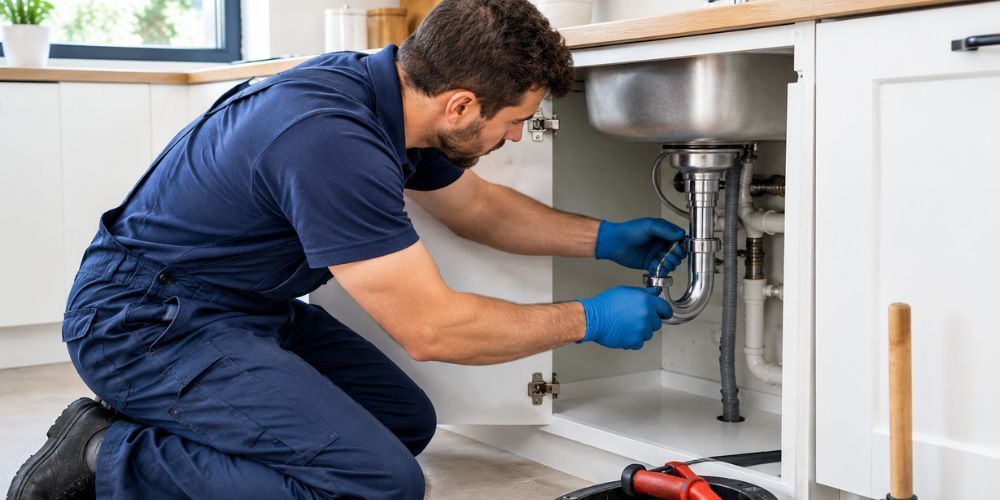
If the plunger doesn't work, the blockage is usually sitting in the U-shaped pipe under the sink. This is the most effective DIY fix for a stubborn blockage, and it needs no chemicals.
- Place a bucket under the trap to catch the water and sludge, and put on rubber gloves.
- Unscrew the two slip nuts either side of the U-bend by hand (use pliers wrapped in a cloth if they are tight) and lower the trap away.
- Empty and clean it into the bucket, removing hair, grease and food debris, then rinse it through.
- Refit the trap, hand-tighten the nuts, run the tap and check for leaks.
Try Baking Soda And Vinegar
For light grease and soap build-up, pour half a cup of baking soda down the plughole followed by half a cup of white vinegar. Leave it to fizz for 15 to 30 minutes, then flush with very hot water from the tap. Avoid pouring boiling water down plastic waste pipes or onto cracked porcelain. This will not shift solid blockages, so move on to the U-bend if the water still drains slowly.
Use Drain Cleaner As A Last Resort
Shop-bought drain cleaner can dissolve organic blockages such as hair and grease, but it should be your last option, not your first. Always follow the instructions on the bottle, wear gloves and eye protection, ventilate the room and never mix different products. Avoid regular use, as harsh chemicals can damage older pipes and harm the environment. If the cleaner doesn't work, don't add more: tell your plumber what you used, as the standing water can be harmful to handle.
Use DIY Tools To Unclog Your Sink
There are also a number of helpful tools you can buy that will help you to clear the stubborn blockages you find in the sink. We've gathered a list below.
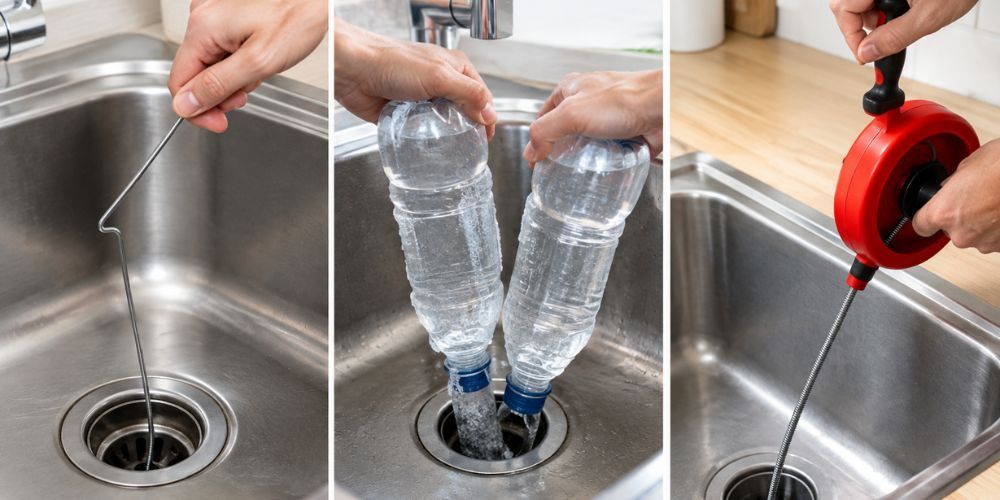
- Wire – Simply straighten a wire coat hanger and gently push it down the sink hole. With a small application of pressure this can be helpful and effective at unblocking the sink.
- DIY Drain Jet – Now this will not always work, but it is harmless to give a try. All you need is two empty bottles and some hot water. Fill up the bottles with the hot water, place them at the opening of the sink and squeeze the water down (with force). This may work as a weaker version of a drain jet, that can dislodge blockages and flush them down the pipe.
- Drain Snake – A drain snake is a helpful tool to have in every household. It is a long flexible tool that can bend through the pipework and be used to dislodge stubborn blockages in the plumbing system. They are cheap and easy to use. All you need to do is rotate the handle back and forth, letting the head of the tool do all the work for you. These can be found at your local hardware shop or you can order it from places like Amazon.
How To Stop Your Sink From Clogging Again
- Use a plug hole strainer to catch hair and food scraps
- Never pour cooking fat or oil down the kitchen sink; wipe pans first
- Avoid coffee grounds and rice going down the drain
- Flush the sink with very hot water weekly to keep grease moving
Call A Qualified Plumber
If all the above tips don't work, then it's time to call in the experts. As we mentioned before, there are some blockages that require professional solutions. You need to know when to hang your DIY hat up and call a plumber to resolve the sink blockage effectively. A plumber has access to higher spec equipment than what you can pick up from your hardware store. They also have investigative equipment that can diagnose the problem at hand, in more detail which allows them to pick the best solution. It's important that you know when the limitations of your abilities and signal for professional help.
Need a professional who will get the job done to your satisfaction? Contact us today and let's sort the problem out for you.
Frequently Asked Questions
What is the fastest way to unblock a sink?
Remove standing water and debris from the plughole, block the overflow and use a plunger. If that fails, clean the U-bend under the sink.
Does baking soda and vinegar really unblock a sink?
It can clear minor grease and soap build-up, but it will not shift solid blockages like food waste or hair clumps. Use a plunger or clean the U-bend for those.
Is it safe to use drain cleaner?
Occasionally, if you follow the label, wear gloves and never mix products. Repeated use can damage older pipes, so treat it as a last resort and tell your plumber if it doesn't work.
Why does my kitchen sink keep blocking?
Usually a build-up of grease, food scraps and soap in the trap or waste pipe. A plughole strainer and keeping fat out of the sink prevent most repeat blockages.
When should I call a plumber for a blocked sink?
If DIY methods fail, the blockage returns quickly, several drains are slow at once, or you notice smells, gurgling or leaks.
You might also like