Boiler Lockout Explained: Ignition Lockout, Overheat Lockout, Causes & How to Reset
A boiler lockout is a safety shutdown. When your boiler senses a fault, such as a failed ignition, overheating or low pressure, it deliberately shuts itself down and shows a warning light or error code, so it can’t keep running unsafely. Finding your boiler in lockout is frustrating, but it’s doing its job: it stops a minor fault from turning into a dangerous or expensive one.
This guide explains what a boiler lockout actually means, the difference between an ignition lockout and an overheat lockout, the most common causes and fault codes, how to read the pattern when your boiler keeps locking out, and how to reset it safely. You’ll also get simple troubleshooting steps to try before you call a professional
boiler repair engineer.
What Is a Boiler Lockout?
A boiler lockout means your boiler has intentionally switched itself off. It’s a built-in safety feature that shuts the unit down the moment it detects something wrong, then waits for someone to check the cause before it will run again.
Different boilers are built differently, so the exact trigger can be hard to pinpoint at first, but the idea is always the same: prevent a small fault from becoming a major, dangerous or costly one. Once you’ve corrected the cause and reset the unit, it starts working again.
An Ignition Lockout?
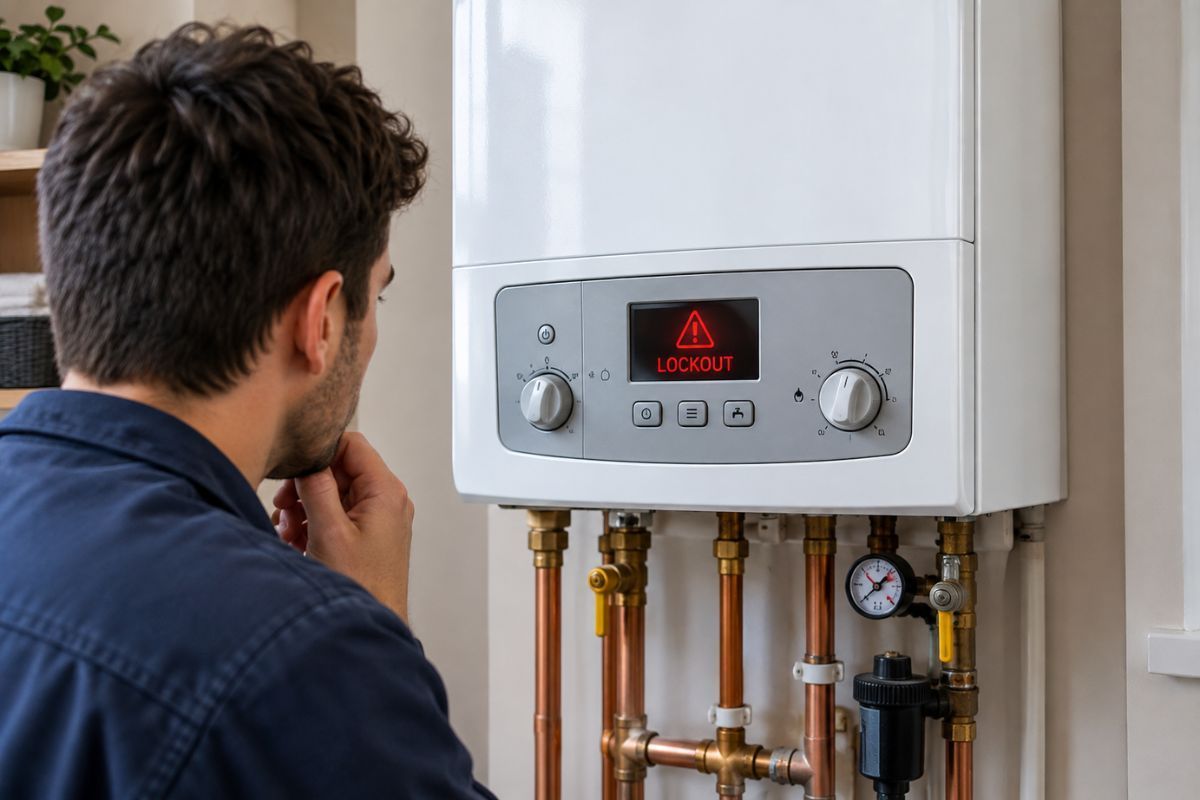
An ignition lockout (sometimes shown as “ignition lock out”) happens when your boiler tries to light but can’t detect a flame — so after a few failed attempts, it locks out for safety rather than pumping unburnt fuel into the chamber. It’s one of the most common types of boiler lockout.
Typical causes of an ignition lockout include:
• No or low gas/oil supply — an empty oil tank, a closed gas valve, or other gas appliances not working either.
• A dirty or faulty flame sensor — it can’t “see” the flame even though the boiler has lit.
• Ignition or electrode faults — a worn ignition lead or spark electrode failing to light the burner.
• Air in the fuel line (oil boilers) — stops the burner lighting after a delivery or when the tank runs low.
Check your fuel supply first, then reset once. If the ignition lockout returns, the fault is internal — book an engineer rather than resetting repeatedly.
Overheat Lockout? (incl. L9 and similar codes)
An overheat lockout happens when the water in your boiler gets hotter than its safe limit and a safety thermostat trips to shut it down. On many boilers, this shows as an overheat code such as L9, E9 or A1 (codes vary by brand). Am I in danger? The lockout itself is protecting you — but an overheat should always be investigated, not repeatedly reset.
Common causes of an overheat lockout are a restricted flow of water around the system: a tired or stuck pump, trapped air, low pressure, or limescale and sludge on the heat exchanger. Because repeated resetting of an overheat lockout can damage the heat exchanger, this is one to hand to a Gas Safe engineer if a single reset doesn’t hold.
How To Tell If Your Boiler Has Locked Out
Most boilers make a lockout obvious: you lose heat and hot water, and the front panel shows a clear warning. Look for:
- A flashing red or green light on the control panel
- A lockout symbol or steady warning light
- An error or fault code on the display screen
- No heat or hot water
Older boilers lock out more often than newer ones, especially if they’ve been neglected or have worn parts. Regular maintenance reduces how often this happens.
Common Boiler Lockout Fault Codes
Fault codes vary by manufacturer, so always check your boiler’s manual or the boiler fault code guide. As a rough guide, most lockout codes fall into one of these groups:
| Lockout Type | What It Means | Example Codes | What to Do |
|---|---|---|---|
| Ignition / flame lockout | Boiler failed to light or lost the flame | F2, L2, EA, F28/F29 | Check the gas or oil supply; reset once according to the manufacturer's instructions. |
| Overheat lockout | Water exceeded its safe temperature | L9, E9, A1, F20 | Avoid repeated resets; have the pump, air and system pressure checked. |
| Low pressure | System pressure dropped too low | F1, E119, F22 | Check the manual and top up to the recommended pressure, often around 1.2 bar when cold. |
| Fan / flue fault | Fan or flue safety checks have failed | Varies by brand | Switch off the boiler if advised and contact a Gas Safe registered engineer. |
Whatever the code, note it down or photograph it before resetting — it’s the fastest way for an engineer to diagnose the fault.
How The Safety Lockout Actually Works
Your boiler has a network of tiny sensors checking it every second — water temperature, system pressure, flame, and gas or oil flow. When a reading goes outside the safe range, the control unit acts immediately: it cuts off the fuel supply, switches off the ignition, turns on the warning light and blocks any attempt to fire up.
The boiler then waits for you. You have to fix the fault and manually press reset before it will run again. That manual step matters — it forces someone to check the real cause rather than letting the boiler keep running with a hidden problem.
Also Read: Which Boiler Is Best In UK For Long-Term Savings?
Oil Boilers: Fuel and Tank Problems That Trigger Lockouts
If you heat with oil, your first check is the simplest: look at your tank. The most common cause of an oil boiler lockout is fuel, not broken parts:
- An empty or very low tank — with no fuel to draw, the boiler tries to ignite, fails and locks out. Check the gauge first.
- Air in the fuel line — drawn in after a delivery or when the tank runs low, stopping the burner from lighting.
- Sludge from the bottom of the tank — as oil gets low, sludge and water can enter and block the flow.
- Frozen or thickened oil pipes — in cold weather, oil struggles to reach the boiler, so it cuts out.
Also check the feed pipes between the tank and boiler for leaks or damage, which can starve the burner of fuel.
Why Your Boiler Keeps Locking Out: Read the Pattern
A boiler that keeps locking out without a fixed fault code is hard to diagnose. The trick is to notice when it happens — the timing points to the cause:
- Goes out immediately after lighting — often a flame problem (dirty flame sensor, poor gas/oil supply): an ignition lockout.
- Goes out when you run hot water — on a combi, a sticking diverter valve.
- Goes out after 10–20 minutes — usually a flow or overheating problem (tired pump, trapped air or scale): an overheat lockout.
- Only locks out in cold weather — think frozen condensate pipes.
- Fires up briefly with no fault code — many combis do this on purpose to keep hot water ready. It’s normal.
Thermostat position matters too. A thermostat next to a lamp, sunny window or radiator can read the room as warmer than it is and switch the boiler off early. Moving it sometimes solves the problem.
How to Reset Your Boiler After a Lockout
Most boilers have a reset button marked with a flame symbol or “R”. After you’ve carried out the basic checks below, press reset once and let the boiler run through its full start-up, which can take up to two minutes.
Brand reset buttons differ slightly — on a Worcester Bosch, the reset is usually the flame/reset button on the front panel; on Ideal, Baxi and Vaillant, it’s the button marked with the reset or flame symbol (check your manual if unsure). The procedure is the same: one press, then wait.
Reset a maximum of two or three times. If the same lockout keeps returning, switch off and stop. Repeated resets can damage the heat exchanger and pump unburnt fuel into the boiler. At that point, call a Gas Safe Registered engineer for gas boilers, or an OFTEC Registered engineer for oil boilers. If you’d rather leave it to a professional from the start, the team at
Assett Plumbing can help.
What To Do When Your Boiler Locks Out
Before you call anyone, run these safety checks in order. Never open the boiler casing or touch the gas or oil parts inside.
- Note the fault code — write it down or photograph it, then look it up in your manual or online.
- Check the pressure gauge — it should read 1.0–1.5 bar when cold. If it’s low, top up slowly from the filling loop to about 1.2 bar.
- Check for frozen condensate pipes in winter — pour warm (not boiling) water over any icy sections of the outside pipe.
- Bleed the radiators from the cold tops to release trapped air that can cause an overheat cut-out, then re-check the pressure.
- Check the thermostat and timer — make sure they’re calling for heat and set above room temperature.
How To Stop Boiler Lockouts Happening Again
Most lockouts are easy to prevent with a little maintenance — a well-kept boiler locks out far less often:
- Book an annual service — a registered engineer spots minor faults before they become a problem. This is the single best step. (Book a boiler service.)
- Insulate condensate pipes so they don’t freeze in cold snaps.
- Fit a magnetic filter to catch sludge and keep the system clean.
- Use a smart thermostat or tank monitor to flag pressure drops or low oil early.
- Run your heating for half an hour once a month, even in summer, so faults surface before winter.
It’s also worth fitting an audible carbon monoxide alarm on each floor — many heating companies, Assett Plumbing included, bundle this into an annual service. And if an older unit (10–15+ years) is locking out every few months, a newer, more efficient boiler is often cheaper over time than repeated repairs.
Read More: Why is My Boiler Making Noise? : Common Causes, Risks & Fixes
Need a Boiler Repair in Northampton, Kettering or Wellingborough?
If your boiler keeps locking out, or an overheat lockout won’t clear after one reset, our Gas Safe engineers can find and fix the fault fast — no call-out fee, 12-month guarantee. Book in your area:
Final Thoughts
A boiler lockout is your heating system protecting itself. Most are simple to clear: note the code, run the basic checks, and reset once. But never keep resetting an overheat lockout, and never ignore a fault that keeps coming back. If in doubt, Assett Plumbing is here to get your heat and hot water back safely. You may also want to read
why your boiler is making a noise.
Frequently Asked Questions
What does ignition lockout mean on a boiler?
An ignition lockout means your boiler tried to light but couldn’t detect a flame, so it shut down for safety after a few failed attempts. Common causes are no or low gas/oil, a dirty flame sensor, or an ignition fault. Check your fuel supply, reset once, and call an engineer if it returns.
What is an overheat lockout (e.g. L9)?
An overheat lockout means the water got hotter than its safe limit, and a safety thermostat tripped, often shown as a code like L9, E9 or A1. It’s usually caused by restricted flow — a tired pump, trapped air, low pressure or scale. Don’t keep resetting it; have it checked.
Is a boiler lockout dangerous?
The lockout itself isn’t dangerous — it’s a safety feature that means your boiler detected a problem and shut down. The cause can be minor, like low pressure, or more serious, like overheating. Overheat lockouts should always be checked rather than reset repeatedly.
How do I reset my boiler after a lockout?
Carry out the basic checks first, then press the reset button (marked with a flame symbol or “R”) once and let the boiler run its full start-up, up to two minutes. On most brands, including Worcester, Ideal, Baxi and Vaillant, it’s a single press. Reset no more than two or three times.
Why does my boiler keep locking out?
Notice when it happens: immediately after lighting points to a flame/ignition fault; after 10–20 minutes suggests overheating or poor flow; only in cold weather often means a frozen condensate pipe. If it keeps locking out, stop resetting and call a registered engineer.
Can I just keep resetting my boiler?
No. It’s fine to reset two or three times after the basic checks, but if the lockout keeps returning, something is wrong. Repeated resetting can damage the heat exchanger and may void your warranty — stop and call a registered engineer.
What does a boiler F2 error mean?
On many boilers, such as Ideal models, F2 means the flame has been lost or can’t be detected — the boiler lit but the flame went out, so it locked out for safety. Check the gas or oil supply, reset once, and call an engineer if F2 returns.
Why is my oil boiler locking out?
Usually fuel-related: an empty or low tank, air in the fuel line after a delivery, sludge in the tank, a blocked oil filter or a dirty flame sensor. Check the fuel level first. An annual service by an OFTEC engineer clears most of these causes permanently.
My boiler won’t light at all — where do I start?
Start with the basics: Is the boiler on? Is the timer set to heat? Is the thermostat above room temperature? Is the pressure 1.0–1.5 bar? Do you have fuel, or are other gas appliances working? If all checks are correct, the fault is internal and needs an engineer.
Is a boiler lockout the same as a breakdown?
No. A lockout is a temporary safety stop you can often clear by fixing the cause and resetting. A breakdown usually needs repair or new parts. Ignore the cause behind a lockout, though, and it can lead to a breakdown.
Boiler keeps locking out? Stop resetting it.
A Gas Safe engineer can find the fault. No call-out fee and a clear written quote before any work starts.
You might also like