Which Boiler Is Best in the UK? The Most Efficient, Money-Saving Choice for Your Home
The best boiler for long-term savings is the smallest boiler that still meets your hot water needs, is properly fitted and has effective controls. So when people ask which boiler is best, what boiler should I get, or which boiler to buy, the honest answer is rarely about brand - it's about matching the boiler to your home, your hot water habits, your budget and a unit that modulates down efficiently rather than short-cycling. The best choice for your home and your budget is the one that is correctly sized, efficient to run, and fitted at a fair total price - not simply the cheapest box.
Choosing the right boiler also cuts the need for frequent boiler repairs down the line. This guide shows you how to find that match, which boiler types suit which homes, how to spot the most efficient, money-saving option, and how to avoid choices that quietly cost you over the next 15 years.
Choosing the Best Boiler With Long-Term Value in Mind
A boiler costs money in three ways. You pay once for the unit and fittings. You pay every day for the fuel it burns. And you pay again every time it breaks. Most buying guides only cover the first - which is why people save £300 on the box and give it all back over the next four winters. Instead, judge the boiler on its total lifetime cost, and keep that lens for the rest of this guide.
Types of Boiler in the UK: Combi, System & Regular
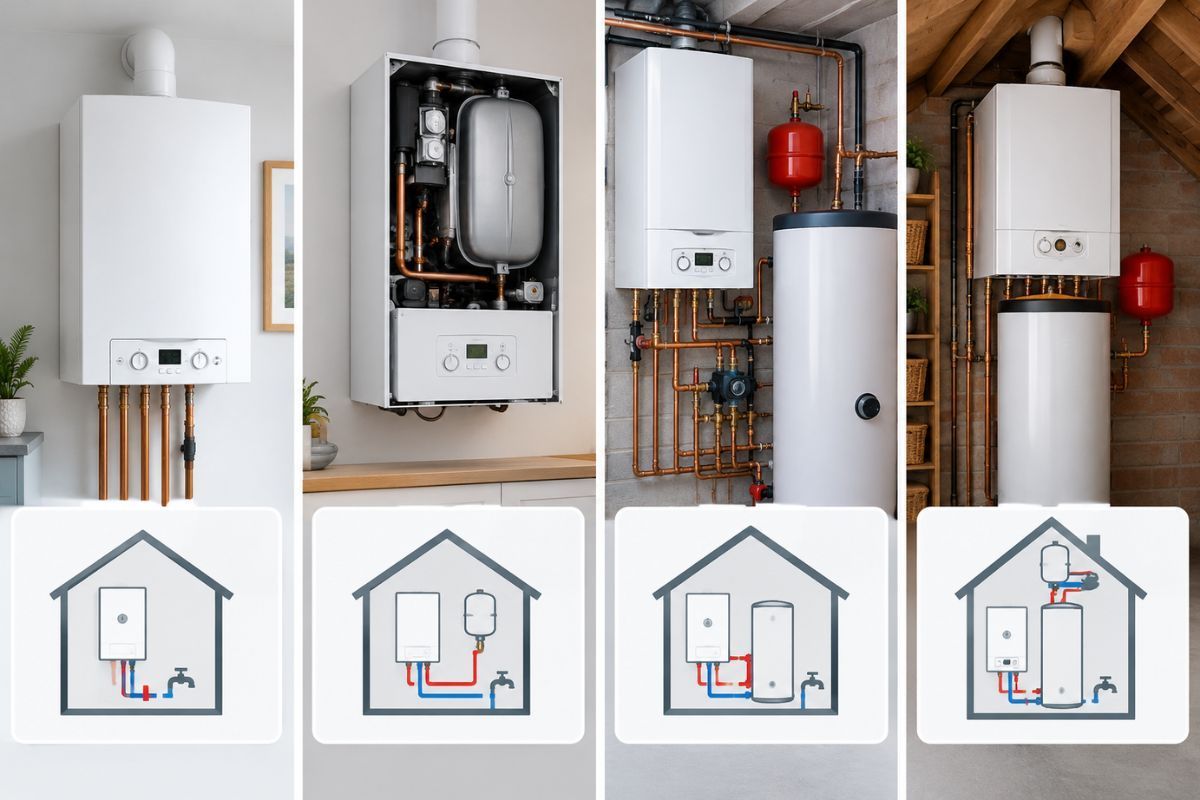
A handful of boiler types cover almost every UK home. Each handles hot water differently, and that difference comes down to how much space you have and how many taps you run at once.
| Boiler Type | Best For | Needs a Cylinder? | Needs a Loft Tank? |
|---|---|---|---|
| Combi | Flats and smaller homes with one bathroom | No | No |
| Storage combi | Busy homes needing a little more hot water | Small tank inside the unit | No |
| System | Homes with 2 or more bathrooms and good mains pressure | Yes | No |
| Regular (traditional) | Large or older homes with several bathrooms in use at once | Yes | Yes |
- Combi boilers keep everything in one box, heating water straight from the mains, so there's no cylinder or loft tank, and your shower runs on mains pressure. They're the most popular choice in the country.
- Storage combis work the same way but hide a small tank inside the unit - handy when two taps run at once, without leaving a large cylinder behind.
- System boilers feed both your radiators and a hot water cylinder, with the main parts inside the boiler. When a combi can't keep up, this is usually the next step - which is why the best system boiler suits homes with two or more bathrooms. (New to these? See our guide to what exactly a combi boiler is.)
- Traditional (regular) boilers heat and store water in a cylinder and need a cold water tank in the loft. They suit larger homes with lots of radiators and several bathrooms in use at once - in return, you need the space and have to wait when the stored water runs out.
What Is the Most Efficient Boiler? (A High Rating Doesn't Mean a Low Bill)
Every modern gas boiler is a condensing boiler - not a separate type, but a feature they all share, capturing and reusing heat that older models threw away to reach over 90% efficiency. So which is the most efficient boiler? On the label, electric boilers claim almost 100%, and heat pumps hit 200-300% because they move heat rather than make it.
So electric wins? No. Efficiency only tells you how little energy the unit wastes - not what that energy costs. Electricity costs far more per unit than gas in the UK, so a 100%-efficient electric boiler still runs more expensively than a 90%-efficient gas one. The rule of thumb: compare the cost per unit of heat, not the number on the label. Today on mains gas, a good condensing gas boiler is the most efficient, money-saving way to heat the average UK home. You can sense-check running costs against independent figures from the Energy Saving Trust.
Why a Boiler's Minimum Output Matters More Than Its Maximum Power
Most homeowners focus on the biggest number on the spec sheet, but one of the most important figures is often overlooked: the boiler's minimum output. It drives how efficiently your system runs, how much energy it uses and what you pay. A typical three-bed UK home needs just 4kW to 8kW of heat on the coldest day - yet boilers advertise 24kW, 30kW and 38kW. Those big numbers describe hot water output, not heating. The smallest heating-only boilers still start at 11kW to 13kW, so a small gas boiler with a low minimum output is what keeps a smaller home from short-cycling and wasting gas. In old money, that heat requirement is roughly 14,000 to 27,000 BTU, so if you are sizing in BTUs, match that heat-loss figure rather than the big hot-water number on the box.
Future-Proof Your Home With the Right Boiler
A new boiler lasts about 10 to 15 years - a long time in a family home. So picture the house at the end of that period, not just today. A loft conversion changes your hot water needs. Two small children become two teenagers showering every morning. Extensions add radiators. Sizing only for today can leave you over-fitting and paying twice.
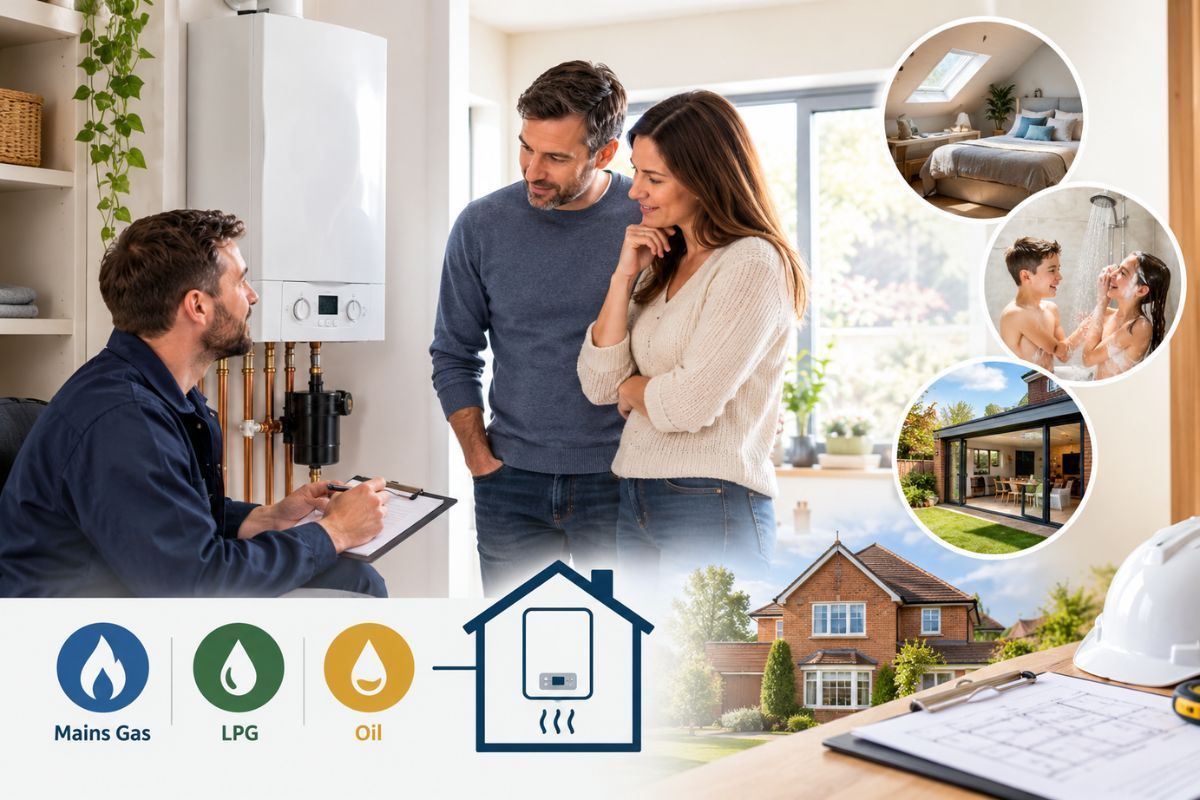
Fuel matters too. Boilers run on mains gas, LPG or oil, and what's on your street usually decides it - gas costs less to run than oil, so if the mains passes your door it's usually the right choice. Off-grid, oil and LPG step in, though oil units often stand on the floor and need more space. Whatever you choose, get a qualified engineer to design the system; a proper survey beats website-form guesswork every time.
Check the Flue and Venting Before You Choose
Your new boiler has to work with your home's existing flue and venting, or the job gets more involved and more expensive. The flue's position, its route out through the wall or roof, and its clearance from windows and doors all affect which boilers can be fitted and where. If you are switching boiler type or moving the unit, ask your installer to confirm the existing flue can be reused - or what a new flue adds to the price. It is one of the most common things that changes a quote.
What You Actually Pay Extra For on a Premium Boiler
Two things separate a good boiler from a great one: build quality and after-sales support. Plenty of boilers read well on the spec sheet, then break on the wall - and in January the spec sheet won't help you; parts on the shelf and an engineer this week will. That support network is invisible on day one and invaluable in year six. Useful shortcut: the middle of the range is usually the sweet spot. The entry-level model cuts corners you'll meet later; the flagship has features most homes never use. A mid-range unit suits most UK homes to the ground
New Boiler Costs: What to Budget
Price depends on the boiler type and how much work the install involves. As a rough UK guide:
| Job | Typical Cost |
|---|---|
| Combi unit only (before fitting) | £700–£1,400 |
| Like-for-like combi swap (installed) | £1,800–£3,000 |
| Converting to a different system type | £3,000–£5,000 |
Remember, the unit is only one line on the invoice - labour, a system flush, a magnetic filter and a decent thermostat all count toward the real total. For a firm figure on your home (including a job like a new combi boiler and radiators), get a fixed-price quote for boiler replacement and new installation.
The Checklist That Protects Your Savings
Long-term savings live in the paperwork as much as the hardware. Check these five before you sign anything:
- Read the warranty small print - a 12-year warranty sounds great, but it only holds if you book an annual service with a Gas Safe registered engineer. Skip a year, and you can lose the cover.
- Budget for the whole job - labour, system flush, magnetic filter and a suitable thermostat all add to the headline unit price.
- Get three fixed-price quotes - you're not just after the lowest figure; compare what each engineer proposes and why.
- Check the installer - anyone touching gas should be on the Gas Safe register. It takes ten seconds, and brand accreditation often unlocks longer warranties.
- Commit to an annual service - it preserves the warranty, keeps the boiler safe, and catches small faults before a £700 callout. (Book a boiler service in Northampton.)
Which Boiler Should I Get? The Best Boiler by House Size
Put it together, and the answer stops being a mystery. Use this as a quick guide to which boiler to buy for your home:
- Flat or small house, one bathroom: a compact combi with a low minimum output.
- Three-bed semi, one bathroom, busy mornings: a storage combi, or a combi with a higher flow rate.
- Four-bedroom house or two-plus bathrooms used at once (good mains pressure): a system boiler with a suitably sized cylinder.
- Large or older house, poor mains pressure: stay traditional and replace like for like.
- Whatever type you pick, apply a savings filter: the lowest output you can get away with, proper controls, and a warranty you'll actually keep up. That combination beats any brand name on its own.
The Bottom Line
Long-term savings don't come from a logo. They come from a boiler that fits your home, modulates down when the weather turns mild, stands behind a warranty you keep, and is fitted by someone who surveys before quoting. Get those four right and almost any well-made modern boiler will serve you for 15 years.
Next step: before accepting any price, ask each installer for the minimum output figure and the heat-loss calculation behind their recommendation - if they can't produce one, keep looking.
Contact the team at
Assett Plumbing are happy to talk through your options and give you a fixed price with the figures behind it. If your current boiler is on its way out, you might also want to read why it's
making a noise or
keeps locking out.
Frequently Asked Questions
Which boiler is best for a 3 bedroom house?
For a three-bed house with one bathroom, a compact combi covers it comfortably. On the coldest day, the house only needs 4kW to 8kW of heat, so choose the model with the lowest minimum output rather than the biggest headline number. If two bathrooms are used regularly, step up to a storage combi or system boiler.
What is the best boiler for a four bedroom house?
A four-bedroom home - especially with two or more bathrooms used at once - is usually best served by a system boiler and a correctly sized hot water cylinder, provided your mains pressure is good. If pressure is poor or the house is older with many radiators, a traditional (regular) boiler may suit better.
What boiler should I get / which boiler is best to buy?
Match the boiler to your home, not the brand: how much space you have for a cylinder, your mains pressure, and whether several taps run at once. Flats and small homes suit a combi; 2+ bathrooms suit a system boiler; large older homes suit a regular boiler. Then size it to your heat loss, not the biggest number.
What is the most efficient boiler?
On mains gas, a modern A-rated condensing gas boiler is the most efficient, money-saving choice for the average UK home. Electric boilers and heat pumps are more efficient on paper, but because electricity costs more per unit, gas is usually cheaper to run - compare cost per unit of heat, not the efficiency label.
Are system boilers better than combi boilers for saving money?
Not automatically. With several taps running at once, a system boiler wins, because a combi drops pressure trying to serve them. In smaller homes, the combi wins, because stored hot water always loses some heat. Match the boiler to your hot water demand, and you save either way.
How much does a new boiler cost?
A combi unit is typically £700-£1,400 before fitting, a like-for-like installed combi swap runs £1,800-£3,000, and converting to a different system type is £3,000-£5,000. Always budget for labour, a system flush, a magnetic filter and a thermostat on top of the unit price.
How do I know which boiler I need?
Answer three questions: How much space do you have for a cylinder? Which system sits there now? Do two or more people need hot water at the same time? Those point to the type; a Gas Safe engineer then sizes the unit with a proper heat-loss survey.
How long does a boiler last?
A well-installed modern boiler from a reputable manufacturer lasts around 10 to 15 years. Lifespan depends on the quality of the fit, the water in your system and annual servicing. A boiler that short-cycles all year ages faster than a correctly sized, well-maintained one.
Is a bigger boiler better?
No - and this myth costs people money. An oversized boiler can't modulate down in mild weather, so it short-cycles, wasting gas and wearing itself out. Size the boiler around your hot water demand and heat loss, never around the largest number available.
Which boiler is the best choice for my home and my budget?
The best choice balances three things: the right size for your home's heat loss, efficiency that keeps running costs down, and a total installed price you are comfortable with - not just the cheapest unit. Size it to your actual demand, choose an A-rated condensing gas boiler if you are on mains gas, and budget for labour, a flush, a filter and a thermostat as well as the boiler itself.
What size boiler do I need (kW or BTU)?
Boiler size is about matching your home's heat loss, not buying the biggest number. A typical three-bed UK home needs only about 4kW to 8kW of heating on the coldest day, which is roughly 14,000 to 27,000 BTU. The larger figure on the box is hot water output. A Gas Safe engineer sizes it properly with a heat-loss survey.
Get the right boiler — with the figures to prove it
You’ve seen how much the right size, output and install save over 15 years. The last step is a quote that shows its working. Assett Plumbing gives you a fixed price for your new boiler with the heat loss calculation and minimum output figure behind it — the exact numbers this guide tells you to ask for. Family-run and Gas Safe registered, serving Northampton, Kettering, Wellingborough and across Northamptonshire for over 30 years, with no call-out fee and a clear written quote every time.
Give us a Call 01604 372395You might also like